SB Review - September 2026
September 30, 2026 (3w ago)0 views
QUICK STOP
Kylian Mbappé leaves Nike for On — and takes equity, not just a logo.
A ten-year deal as global ambassador. The fee is undisclosed. The structure is the story: at 27, Mbappé becomes a shareholder of On and will help develop its football footwear and apparel. The player stops renting a brand and starts owning a piece of one.
Sport Business, Sponsorship & the month Mbappé left Nike.
This issue covers 2–30 September 2026. Mbappé’s exit is the contract that resets the athlete-brand relationship. Around it: a Premier League sleeve market that cannot fill its own inventory, a Champions League beer deal ending after 33 years, and Manchester City found guilty in the biggest financial case in the league’s history.
Sponsorship
Socios × RFEF: the biggest national fan token, then the crash
Socios.com (Chiliz) and the Spanish federation unveiled the deal in June, at the World Cup’s launch: a minimum of €1m a season for three years, before any share of token sales. Classic Chiliz structure — a fixed annual fee plus a 50:50 split on fan-token sales, and the ratio moves. The higher the guarantee, the smaller the rights-holder’s cut of sales.
Socios sits in the third, “Partner” tier of the RFEF portfolio, as Official Fan Token of the men’s team only. Women’s national teams are never part of Socios’ country deals. The rights are thin next to a club contract: no stadium branding, no player image rights for advertising. A presence on the federal site, one launch post, training experiences, and tickets — some VIP — for home matches. Tottenham’s 2023 deal (five years, about £500k a season) included stadium branding and image rights.
The $SPAIN sale opened on 19 June for three hours: 3 million tokens at $1, a $3m potential and Socios’ largest primary sale for a national team. Figures are unconfirmed, but a sell-out would have meant roughly $1.5m to each side, on top of the RFEF’s minimum. Future supply is capped at 30 million tokens, the reserve held at Socios’ sole discretion.
The price never held the issue price. It peaked at $0.9196, three days before the final won against Argentina. By 16 August it had touched $0.1331 — about −86% for the first buyers in under two months, World Cup win included. Neither “Burn to Glory” (tokens destroyed on results; seven Spanish wins burned millions) nor “Locker Room” (a 10% bonus for early backers) stopped the slide.
Chiliz now sells engagement — votes, rewards, experiences — rather than a trade. Club football remains the revenue engine: Inter, Barcelona, Atlético, PSG, Arsenal, City, Tottenham. Inter extended to 2028.
An empty sleeve is now a Premier League offence
On matchday one, a defeat at Hull, Manchester United broke the league’s new kit rule. The badge was on the right sleeve. The left sleeve was bare.
Rule M.15: from this season, a left sleeve without a sponsor must carry the league badge, which in 2026-27 also reads “No Room For Racism”. United missed two marks, one of them a social-responsibility asset. Both sleeves carry the badge from the Ipswich match.
The commercial cause is the end of DXC Technology, sleeve sponsor since 2022-23, and the failure to refill a slot priced above £10m a season. United is one of four clubs opening the season without a sleeve sponsor. Chelsea keeps FPT, but without sleeve rights — and without a front-of-shirt sponsor either. Crystal Palace has not replaced Kaiyun Sports. Sunderland had carried LiveScore Bet.
Chelsea’s sleeve is the sharper tell. The club is hunting a sixth different sleeve sponsor in five seasons: WhaleFin, BingX, Fever, Live Nation, then FPT, now a vacancy. WhaleFin arrived in 2022-23 and left before the year was out. Fever, signed in August 2024, was gone by February 2025. The front of the shirt is no steadier — Infinite Athlete, an eight-week DAMAC deal, then IFS as a global partner through 2027-28 with front-of-shirt rights only to the end of 2025-26. Against Fulham on matchday one, the men’s team played with no sponsor logo at all.
A Club World Cup title has not made the inventory easier to sell long.
FC Sion × Norton Peak: the partnership is the object
FC Sion and Valais watchmaker Norton Peak are making a Swiss Made mechanical watch for 2026-27, 100 numbered pieces. Black dial, red touches, the club crest, a strap in the team’s colours.
This is not a logo on a shirt or an LED board. The club brings history and a community; Norton Peak brings the craft. Scarcity turns sports merchandise into a collectible, on the logic of a luxury or sneaker drop. The canton is the third brand in the story — Norton Peak, founded by Lucas Cucinotta and already tied to the Patrouille des Glaciers, builds its name against Valais institutions, and the club pushes its brand past the match into a premium object.
When a partnership produces something both sides can stand behind, the product becomes the medium: social content, press, a community activation. The test is whether the authenticity (territory, craft, direct distribution, low marketing spend) is visible beyond the press release. In Switzerland, where clubs and companies already have strong regional identities, sponsorship works better as a meeting of two communities than as bought visibility.
UTMB: experiential activation meets a mayor who wants less of it
The 23rd Hoka UTMB Mont-Blanc closed on 30 August: 1,681 finishers on the headline race, Blandine L’Hirondel winning the women’s event. The commercial tension is the story. New mayor François-Xavier Laffin supports the race and wants a smaller footprint. Brands and exhibitors received a letter from the organiser asking them to cancel activations, including “Social Runs”.
What dominated anyway was the experiential format: guided runs, product tests in real conditions, social content. Brand houses sat outside the official village — Columbia’s “Hike Society” chalet, pitched at non-competitive mountain life; The North Face’s Offtrail basecamp, built to produce content; Vibram’s mobile lab, offering biomechanical analysis and free resoling. Performance brands (ASICS, La Sportiva, Merrell, Brooks) ran the same play: test, run, film.
The thing to watch is regulatory. Municipal pressure on commercial saturation can rewrite the activation rules of the next editions.
How Lay’s made itself part of the match
Lay’s equips no athlete and makes no kit. Its territory is the shared emotion — eating in front of a game — from the Champions League to the World Cup.
The sequence is clean. Entry via the PepsiCo–UEFA deal turned snacking into the ritual of the big European nights, at home, in bars, at events. “No Lay’s, No Game” then put Messi, Beckham and Henry inside a platform of humour and entertainment, and placed the brand at the level of a shirt or a scarf: the match is the ecosystem around the pitch. The step up to FIFA followed — activations around Qatar and the Women’s World Cup, then official sponsor of the 2026 World Cup and the 2027 Women’s World Cup.
Lay’s RePlay is the local layer. In 2026 the RePlay World Cup League, a youth tournament modelled on the World Cup, runs in nine cities including Turin. Players who stand out on the pitch and in their community become ambassadors and get a World Cup experience. European club football, then a planetary event, one narrative — sharing, the ritual of the match — and a local device so the brand is not only a media buy.
SumUp takes the Manchester United sleeve
SumUp becomes Manchester United’s sleeve partner. The rights are not a logo and a hope: exclusive giveaways, experiences, and a co-branded personal card with offers and rewards at official club outlets.
The empty sleeve from matchday one has a tenant. The price of the slot — above £10m a season — did not fall. Someone simply agreed to buy distribution, not just visibility.
Mbappé leaves Nike for On
Kylian Mbappé leaves Nike for On, a ten-year partnership as global ambassador. Beyond the fee, still undisclosed, the 27-year-old becomes a shareholder and will take part in developing On’s football shoes and clothing.
Nike loses the player who carried its World Cup silhouette. On is not buying a poster. It is buying a product roadmap with the athlete inside the company. That is a different asset from a boot contract, and it is why this deal sits above every other signature of the month.
Heineken’s 33 years in the Champions League end
Heineken has been the official sponsor of the Champions League since 1994. From 2027-28 it is replaced by its rival. Stella Artois, owned by AB InBev, becomes the official beer of the competition through 2033. The deal, revealed by the Belgian press (7sur7, DH Les Sports+), also covers the Europa League and the Conference League from July 2027.
AB InBev’s marketing argument, via global CMO Marcel Marcondes, is frequency: visibility not only at the weekend but Tuesday to Thursday, ten months a year. David Beckham, Stella ambassador since 2024, stays in the campaigns. The brand already sits on Wimbledon, Roland-Garros and the ATP. This is the football piece of a wider sports push, not a one-off.
Salomon × Ironman, through 2031
Salomon becomes a global premium partner of Ironman in 2027, through 2031. Exclusive rights on performance shoes, apparel and technical bags. Title sponsor of the 2027 Ironman World Championship in Kona, and official partner of the run course on the events the deal covers.
A category lock, not a logo. Shoes, textile and bags are exclusive, and the world championship is the stage.
Newcastle × Coca-Cola: the fanzone, not the 90 minutes
Coca-Cola becomes Newcastle’s official soft-drinks partner in a multi-year deal, and presenting partner of the St James’ STACK fanzone.
The brand is not buying the match. It is buying what happens around it: the atmosphere before kick-off, the music and the supporter culture, the time spent together after the whistle. Same move as Lay’s, at the scale of one club.
Also this month
- LOSC × Basic Fit — premium partner, with the logo on the sleeve for the Champions League campaign
- FC Versailles × PEBL — the club’s first main partner, through 2028, on the front of the shirt
- Decathlon × LFP — five exclusive balls for Ligue 1 McDonald’s showpiece fixtures: Le Classique, L’Olympique, the Derby du Nord, the Derby de la Côte d’Azur, the Derby de Paris
- Paris FC × Brasserie Kronenbourg — hospitality and convivial spaces at Stade Jean-Bouin, with an offer matched to the crowds the ground hosts
- OM × Suez — official supplier for 2026-27 and 2027-28, visibility at the CEPAC Vélodrome, and work with the Fondation Treizième Homme on youth, inclusion and the environment
Further reading
September’s deals split in two. Inventory that will not sell — empty Premier League sleeves, a Chelsea shirt with no logo — against partnerships that stop being inventory: a numbered watch, a fanzone, a ritual of crisps, and an athlete who buys equity instead of renting a boot.
Sport Business
UEFA’s “debut” patch: the shirt becomes a card
Fanatics and UC3 — the UEFA–EFC joint venture that represents European clubs — extend their partnership from 2027 to 2033. The new object is a “debut” patch on every UEFA competition from this season, the model American leagues popularised and FIFA used at the World Cup.
Worn only on matchday one, by players making a first appearance in the Champions League, Europa League or Conference League, even from the bench. It does not come back, even after a transfer. The blue insert is adhesive: peeled off after the match, it becomes a collectible card signed by the player. The shirt keeps a black-and-white “debut”. Two objects, the worn shirt and the card. The reigning champion, PSG, gets its own patch. The most successful clubs get a Patch of Honour.
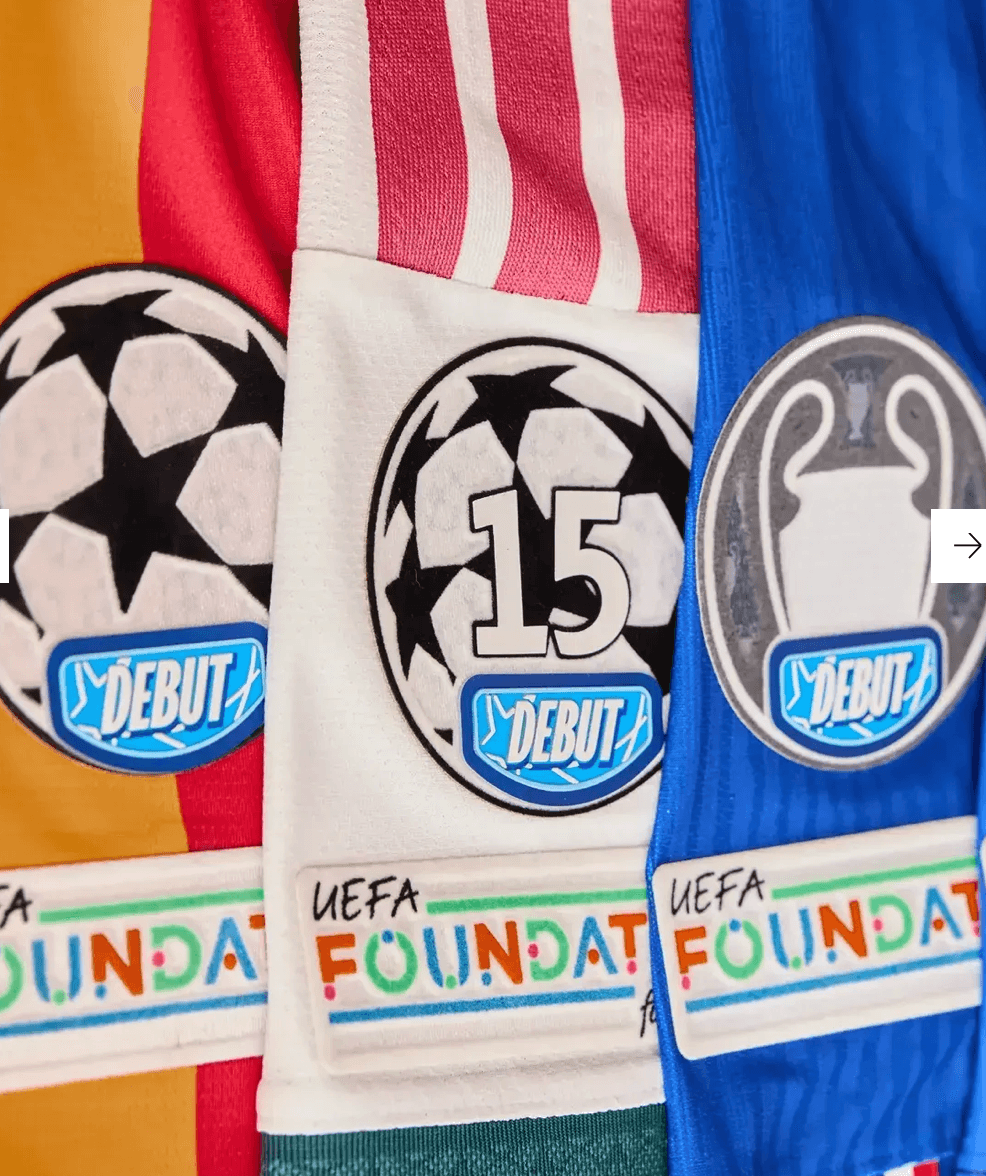
The market moved fast. MLB started it in 2023, then MLS, UFC, NBA, WWE, the NFL from week one this season, and F1 with helmet patches in late 2025. The Bundesliga has a “1st start” patch. The prices explain the rush. Paul Skenes’ debut card sold for over $1m in March 2025. Cooper Flagg’s, bought for about $500 in a break, drew refused offers at $1.5m and simulated auctions near $4m. Victor Wembanyama’s rookie card set the record above $5m. Basketball accounts for 12 of the 20 biggest card sales ever.
FIFA cannot resell World Cup patches until 2031, when its Panini deal ends. European football’s opening is now: a unique shirt and the card that came off it, priced as speculation.
Two Europes of the transfer window
Football Benchmark, on Transfermarkt data, puts the Premier League’s net summer spend at €1.59bn in 2026. Down from the €2.15bn peak of 2022, and still in a different league from the other four.
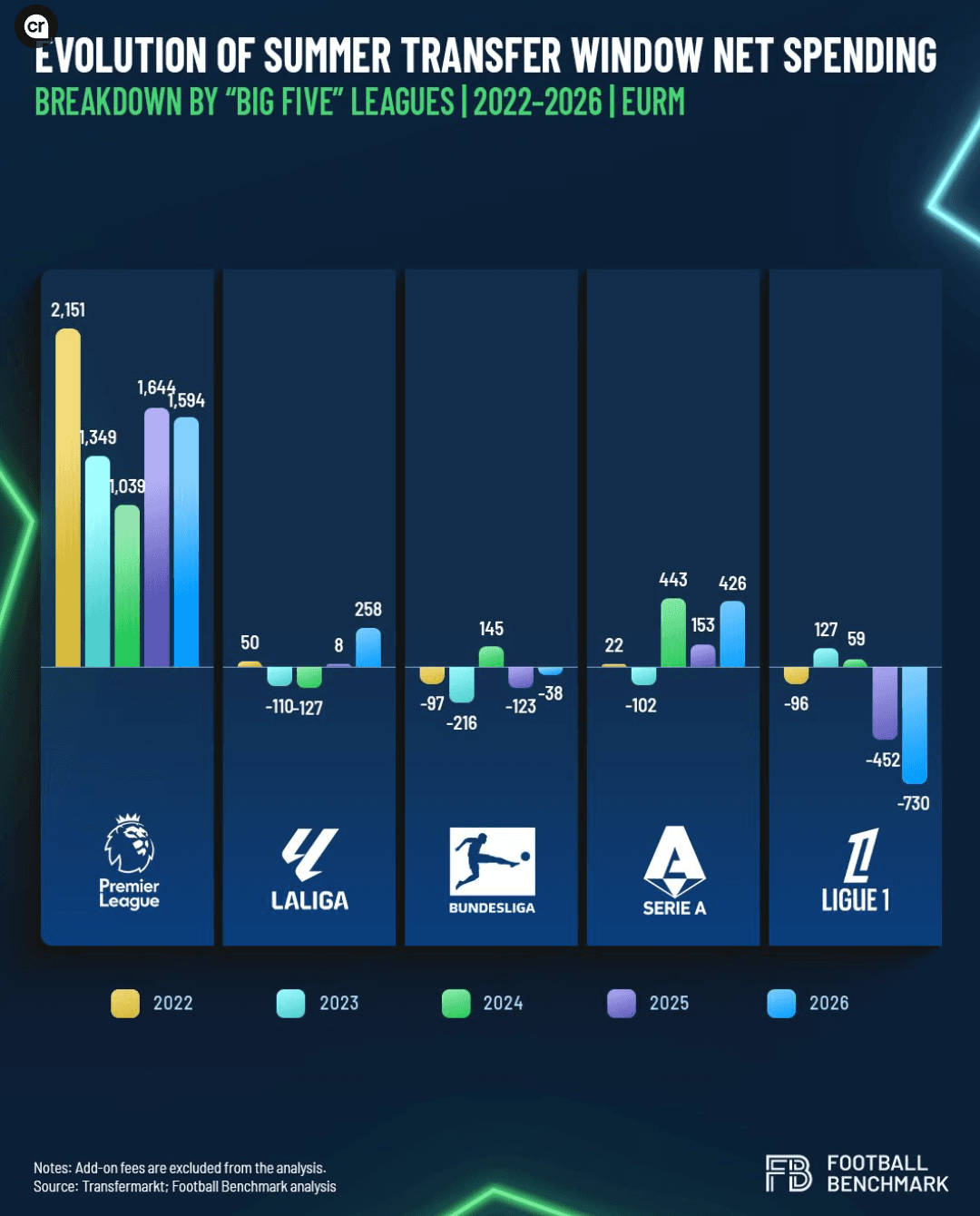
Ligue 1 is the mirror image. A net −€452m in 2025 becomes −€730m in 2026: a league organised to develop and sell, not to invest. Serie A (+€426m) and LaLiga (+€258m) are buying again. The Bundesliga stays close to balance, at −€38m.
One Europe spends. The other, short of comparable revenue, has to sell in order to exist.
Barcelona borrows to finish Camp Nou
Barcelona is looking for investors in a private debt placement to finish the late revamp of Spotify Camp Nou. $342m of investment-grade bonds, three tranches, maturities out to 30 years, run by Goldman Sachs. The bonds are part of a $580m package the club’s delegate members approved the week before.
The money covers the renovation, the cost of the delays, and additions: new VIP and hospitality, a larger museum, stronger 5G. Placement is expected in October and November. An investor day drew strong interest from existing and potential holders. Revenues have suffered for three seasons, with the team in a smaller, harder-to-reach ground. Higher rates mean the new bonds should cost more than the last ones.
Alcohol in the stands: the 1985 ban is back in play
Since 1985, alcohol has been banned in the stands of the top five divisions of English men’s football, a law written against hooliganism. Andy Burnham, prime minister since 20 July 2026 and an Everton supporter, wants it lifted. He calls the legislation outdated, and a discrimination against football fans relative to other sports, and he wants pilots rather than a single repeal.
Drinking inside the ground is already legal — concourses, bars — as long as the pitch is not in view. Women’s football was never covered by the 1985 Act. The FA allowed alcohol in 14 Women’s Super League grounds in 2025-26, seven in each division. The WSL reported no change in supporter behaviour and a rise in average food and drink spend. The FA is extending the trial. The men’s leagues, in the federation’s phrase, are waiting their moment.
Manchester City found guilty of the serious charges
An independent commission, after a three-year examination, has found Manchester City guilty of all the charges tied to serious breaches of the Premier League’s financial rules. The club was cleared on only one of 115 charges.
The finding: sham sponsorship agreements inside a disguised funding system. The sponsors paid only part of the money. The rest came from the owner, Abu Dhabi United Group. Revenue was artificially inflated by more than £900m between 2009 and 2018, and the accounts misled auditors and the football authorities. That revenue is what funded the spending that turned City into the dominant side of the decade — eight Premier League titles, four FA Cups, a Champions League since 2008.
The commission also found that City deliberately obstructed the inquiry, with witnesses giving testimony they knew to be false. The case began with internal documents hacked and published by Der Spiegel in 2018, via Rui Pinto. The Premier League investigated for four years.
City says it is disappointed and surprised, claims innocence, and says it holds irrefutable evidence. It had until Friday to appeal to a three-person panel. Everton and Nottingham Forest recently lost eight and four points for far smaller cases. A finding on this scale could mean exclusion from the Premier League for at least a year, a likely departure of the squad’s stars, and exclusion from the Champions League for at least two. Premier League chief executive Richard Masters called it the most important case in the league’s history.
Why the Premier League can do this, and Ligue 1 cannot
The verdict lands differently once you look at what each league actually is.
The Premier League is a private company limited by shares. Its shareholders are the 20 member clubs, plus the FA. Each club holds one share and one vote. Major decisions — rules, TV and commercial contracts — need a two-thirds majority, 14 clubs. The FA’s “special share” does not vote in ordinary meetings, but a short list of fundamentals (the league’s name, access criteria, multi-club ownership) cannot change without its written consent. A targeted veto, not day-to-day control. Relegated clubs transfer their shares to the promoted ones. Since 1992 the league has been a commercial structure the clubs co-own, and it sells its own TV and commercial rights.
Ligue 1 is organised by the LFP, a loi 1901 association: non-profit, not a company the clubs own. It acts under delegation from the FFF and a public-service mission set by the Code du sport. Clubs are members, not shareholders. To gain commercial room, the LFP created LFP Media in 2022, a simplified joint-stock company, to exploit audiovisual and marketing rights. CVC entered for about €1.5bn and roughly 13%.
The Premier League was built as a business its clubs own, which is why it can sell, sanction and move without asking a federation first. Ligue 1 sits inside an association supervised by the state and the federation. The subsidiary and the outside investor are the two-storey structure the Premier League never had to build.
Also this month
- Laurent Platini is set to leave RC Lens at the end of September, after five years running the commercial department
- OL Lyonnes unveil a mascot, Lyonna, whose job is the atmosphere around the pitch
Further reading
The spending chart and the City verdict describe the same league. The Premier League can spend €1.59bn net and then expel a champion, because the clubs own the company that writes the rules. Ligue 1’s −€730m is not only a revenue problem. It is what an association, supervised from above, looks like when it tries to compete with one.
Fan engagement
PSG rewards its most loyal MyParis member
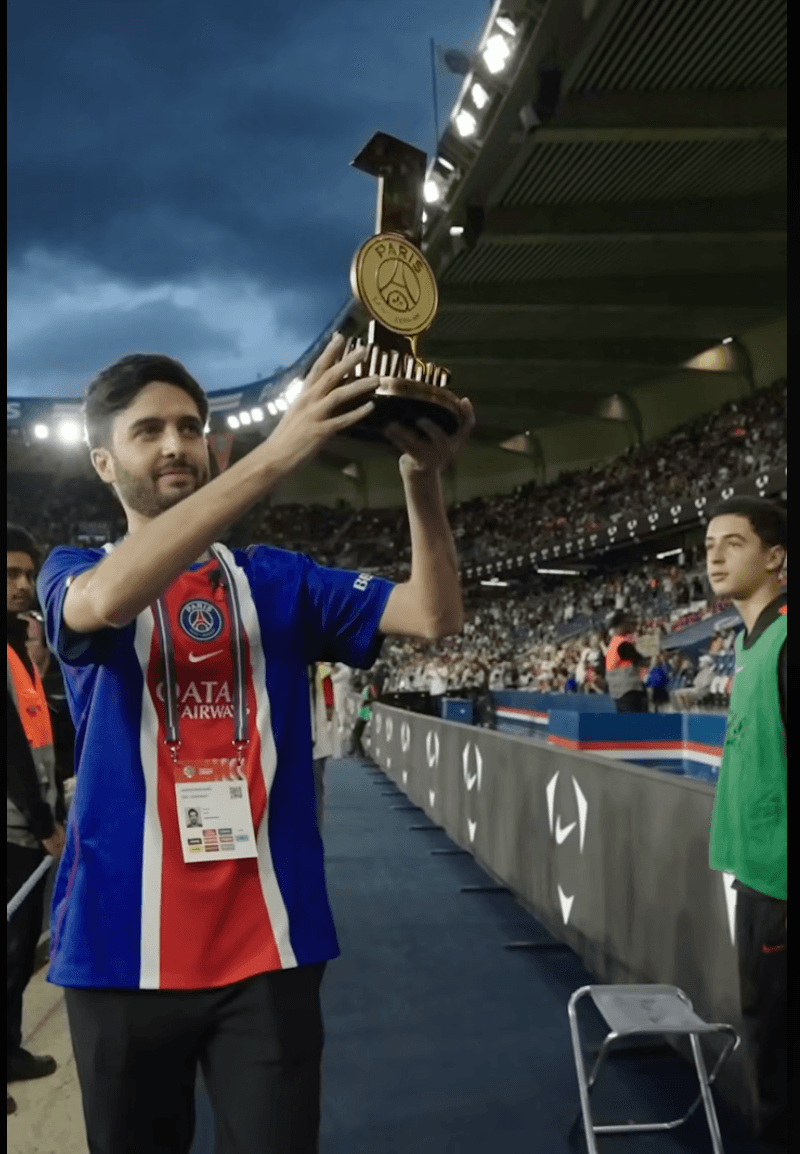
Paris Saint-Germain singled out the most loyal member of MyParis. The reward happened on the pitch, in front of the ground, with a club trophy in his hands — loyalty treated as a public event, not a points balance in an app.
Further reading
Socios asked Spain fans to buy a token and watched it fall 86%. PSG asked one fan to be recognised in the stadium. Engagement that can be seen still beats engagement that can be traded.
Key takeaways
- 1 The athlete deal is now equity. Mbappé does not switch boot supplier. He becomes a shareholder of On and enters product development. A logo on a player is the old contract.
- 2 Premium inventory can sit empty. Manchester United and Chelsea opened the season without a sleeve sponsor, and a new rule turned the blank sleeve into a league obligation. Price is not the same thing as demand.
- 3 Collectibles are splitting in two. UEFA’s debut patch joins a card market where single pieces sell for millions. Socios’ Spain token, the biggest national sale the company has run, lost about 86% in two months. Scarcity works when the object cannot be reissued.
- 4 The Premier League’s structure is the product. €1.59bn of net spending and a guilty verdict on more than £900m of inflated revenue come from the same design: a company the clubs own, able to sell and to sanction. Ligue 1’s −€730m is what the other design looks like.
September’s strongest deals were not the ones with the biggest logos. They were the ones that changed what the partner owns — a share of On, a fanzone, a numbered watch, a card peeled off a debut shirt.
SB Review returns at the end of October with the next round-up of the sport business stories shaping the industry.