SB Review - Summer 2026
September 1, 2026 (2m ago)0 views
QUICK STOP
The World Cup did not just set records. It reset the commercial playbook.
From June to early September, almost every major story pointed the same way: rights, brands and fans are no longer organised around a single screen. Influencer-led broadcasting, naming, heritage rebrands and Google’s AI distribution all sit on top of the same shift — sport as a cultural operating system, not a weekend fixture list.
Sport Business, Sponsorship & the summer the World Cup went continental.
This issue covers June through 1 September 2026. The World Cup was the gravitational centre, but the durable stories sit around it: how rights are packaged, how stadiums are named, how kits become culture, and how brands buy distribution of usage rather than logo exposure.
Sponsorship
XV de France × CMA CGM: reputation as inventory
From July 2026, CMA CGM replaces Altrad on the France rugby shirt at around €10m a year. Group owner Mohed Altrad and former FFR president Bernard Laporte were convicted at first instance in December 2022 for corruption and influence peddling, with an appeal set for September 2026 — keeping that logo on the Bleus’ chests meant a permanent crisis risk.
At this altitude, sponsorship is not only media value. It is crisis insurance.
Salesforce × FIFA: software as tournament infrastructure
Salesforce became an Official Tournament Supporter of the 2026 World Cup and the 2027 Women’s World Cup, with an operational rather than ceremonial brief: workforce management across the 16 host cities, plus AI-powered workflows. The most interesting World Cup deals no longer buy a board — they run the event.
Levi’s accidental ambush
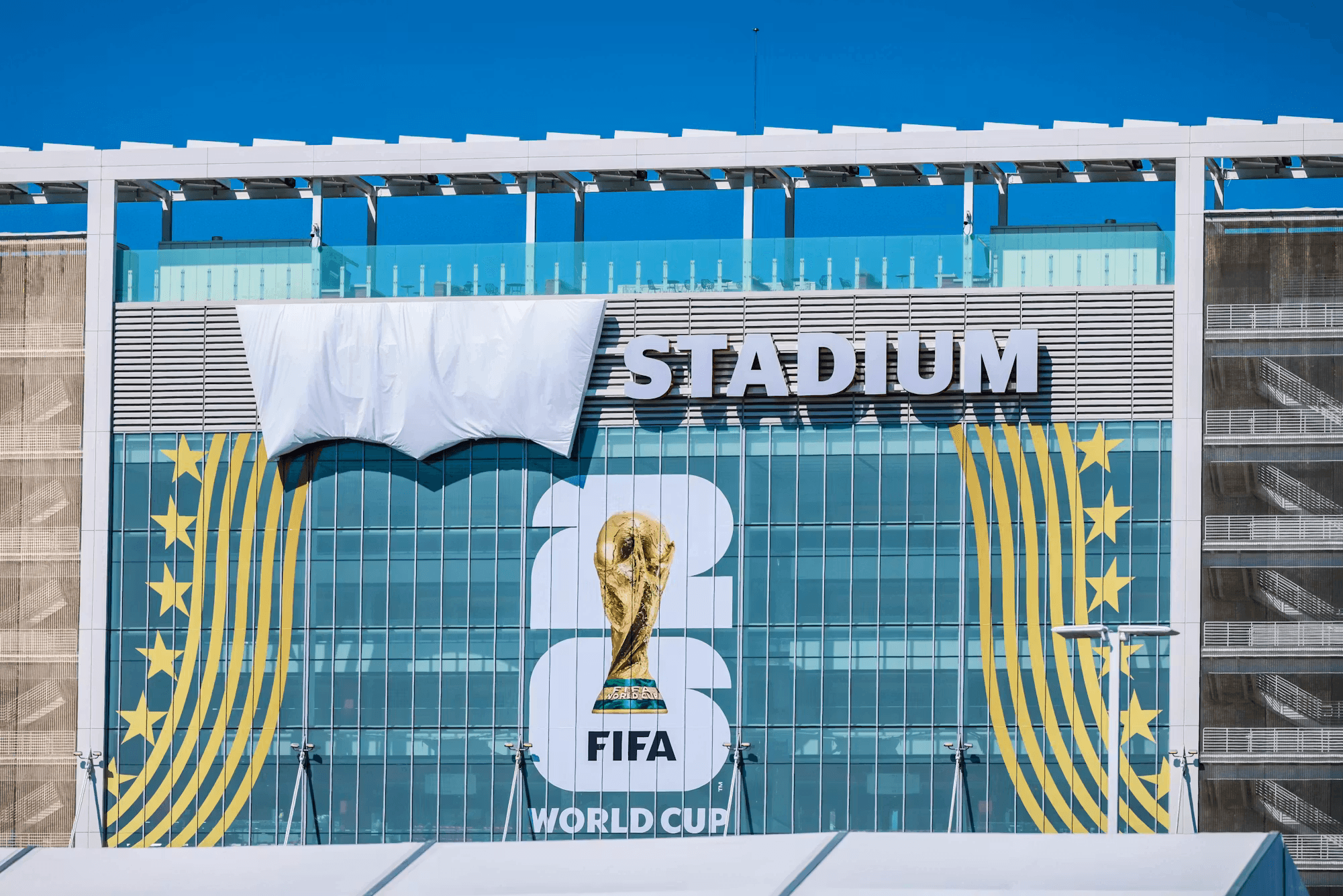
Levi’s Stadium was rebranded San Francisco Bay Area Stadium and the naming partner’s logo had to disappear — but the tarp used to cover it was cut in the exact silhouette of the Levi’s batwing. Clean zones can hide a name. They cannot always hide a shape.
Ludovic Dumas: activation is the price of survival
Ludovic Dumas (XIX Sports Group) sketched a commercially unprecedented edition: FIFA targeting €13bn in revenues, pulled by the appeal of the USA/Mexico/Canada triptych. His warning: with this many sponsors, visibility is no longer enough, and the activation budget should at least match the cost of the rights. The US also unlocks the alcohol category, while athletes are now treated as rights holders in their own right. Interview
Google’s sports push is not sponsorship. It is distribution.
PSG × Google Pixel runs to 2029: Gemini becomes the club’s official AI assistant, Pixel the official smartphone. But the strategy did not start in 2026 — data partner of the English FA in 2019, McLaren in 2022, Liverpool in 2023, a Paris FC dress rehearsal in 2025, then the pivot to Gemini and five clubs signed in weeks this summer, timed to the Pixel 11 launch.
What ships today is “Shot on Pixel” content and wallpapers; tactical assistants remain a promise. The point is elsewhere: Gemini is native to Pixel, so becoming official telephony partner puts AI in the hands of millions of fans — one lever inside a $750m fund for adoption of Google’s AI tools.
PSG × Coca-Cola: the real pitch is the supermarket aisle
A “global” three-year renewal through 2029, financials undisclosed. The only hard number: 400,000 collector cans from 12 October 2026, in 650+ Carrefour stores in Île-de-France.
Coca-Cola does not need awareness in France, and 48,000 spectators a match is not the point. The collector can is a trade argument — endcaps, seasonal listing, centimetres of shelf. The portfolio works as a grid: the FFF covers all of France and ten matches a year, while PSG delivers the densest retail basin and fifty matches of frequency. A crest is worth what it opens in distribution, not in advertising contacts.
Further reading
Summer’s deals split into two jobs. Reputation and infrastructure (CMA CGM, Salesforce) versus distribution of product and productised AI (Google, Coca-Cola). In a cluttered World Cup portfolio, Dumas’s rule still holds: if activation does not at least match the rights cheque, the brand is renting a board, not owning a role.
Media rights
Influencer-led rights and the future of broadcasting
Ampere’s Sports Consumer data shows that in nearly every market surveyed across Latin America, North America and Europe, more than half of sports fans watch influencers doing “watchalongs” — in practice, live commentary from streamers who often do not hold the rights to the match.
Rights holders have started cutting deals with those streamers, so fans get live sport on platforms that already feel native. CazéTV carried the World Cup on YouTube in Brazil. This is not a side channel: it is a second rights market, built around personality rather than the stadium feed.
Further reading
Watchalongs used to look like piracy-adjacent commentary. They are becoming a licensed product. The rights holders who treat creators as distributors — not as a leak — will own the next generation of fans.
Sport Business
Footpack: who owns the World Cup boot
Across 1,248 players from the 48 qualified squads, Nike leads with 42.79%, ahead of adidas (39.74%) and PUMA (10.02%). Nike is number one for a fourth consecutive World Cup, but it is a hollow victory: it equipped more than 62% of players in 2018, roughly –20 points in six years. adidas posts its best score since 2014 and has already overtaken Nike in the big five European leagues.
The trio still accounts for 92.55% of boots — a record that is falling (96% in 2018 and 2022). On shirts, 37 of 48 sides are dressed by the same three, down from 82% in 2022, with adidas leading on 14 teams. The expanded field is quietly opening the door to second-tier brands. Full study: Footpack — World Cup 2026 boots and kits.
What American stadiums actually sell
Every venue is named and sits downtown. One ticket buys the match plus fan zones, bars, terraces and pools, with roughly 200 points of sale and 50 brands per stadium. The ritual starts on the parking lot hours early with tailgate parties, and with no relegation the mood stays festive — the stadium as the place to be, not a test of endurance.
Naming: the Vélodrome, and the French glass ceiling
Marseille’s ground becomes the CEPAC Vélodrome through 2033, priced above the €2.45m a year paid by the previous incumbent. Ten years of Orange never erased “le Vélodrome” from daily speech.
François-Xavier Goudemand’s book on naming across 40 countries explains the ceiling. US contracts run 18 to 40 years (average 13.5), and the IOC has agreed that named stadiums will keep their names at the next American Olympics — a global first. France signs 5 to 7 years where ten should be the floor, and the gap follows: Groupama Stadium at around €6m a year against a Bundesliga average above €10m. Naming is the obvious hedge against falling TV rights, and French clubs still under-monetise it — even as public acceptance reaches 46%, up 8 points in a year.
Deloitte: European football tops €40bn, and hits a ceiling
The 35th Annual Review of Football Finance puts European football above €40bn in 2024-25, +13%, driven by the expanded Champions League, the Club World Cup and commercial revenue. The warning underneath: revenues are rising faster than profitability, and club losses keep growing.
For twenty years the chain was more competitions → more TV rights → more revenue. Deloitte says that model is saturating, and the challenge is now to create more value with fewer matches — through data, personalisation, experience and loyalty.
France signs off its professional sport reform
The text caps league executive pay at €450k gross a year (against €1.2m today), reaffirms federation control over leagues, strengthens the DNCG’s power to block takeovers, and lets Arcom block illicit streams in real time. The sceptical reading: moralisation on the surface, a bureaucratic machine underneath.
Ligue 1+: editorial innovation as a price story
RefCam, micro-drones and referee audio arrive for 2026-27 — and so does the rise, from €14.99 to €16.99 a month for early subscribers and €19.99 for new ones, on a first-year base of 1.1 million. The options exist largely to justify the tariff; the real urgency is to maximise platform value before the next tender.
Selling heritage: Paris FC’s sound, Aurillac’s pitch
Paris FC replaced stadium standards like “Sweet Child O’ Mine” with a bespoke sonic identity built on “Sous le ciel de Paris”, co-created in studio with its captain and a women’s team defender. In Aurillac, the cutler Destannes bought eight squares of the Stade Jean-Alric pitch — laid in 1924, lifted during renovation — and turned them into L’Aurillacois: 300 to 500 numbered knives at €99, €5 per sale to the club association.
The same move at two scales: an asset destined for landfill becomes a rare territorial product because someone narrated the heritage.
Also this summer
- Mercedes-AMG Petronas posted a €145.5m net profit on €732m revenue — an F1 record, with €1bn in sight within two seasons
- Decathlon took 10% of Brompton through its Pulse fund, buying the premium shelf its own folding bikes cannot reach
- Infantino abandoned the plan to open FIFA to private capital via a $10bn FIFA Forward Enterprise, on fears the competitions would be distorted
- Italy has not reached a World Cup since 2014; the telling detail is that Giovanni Malagò, who chaired CONI above the FIGC, now chairs the FIGC itself
- PSG paid a €4,772 bonus to each of its 800+ employees for the 2025-26 season
Further reading
Deloitte’s line is the summer’s industrial thesis: more matches no longer equal more value. Naming, heritage products, sonic brands and American-style venues are all attempts to monetise place, story and relationship — the assets TV rights can no longer exclusively carry.
FIFA World Cup 2026 — the commercial playbook
The commercial architecture
FIFA’s model is segmented by vertical (men’s, women’s, FIFAe) across four tiers: FIFA Partners with global rights across all competitions (Adidas, Coca-Cola, Visa, Hyundai-Kia, Qatar Airways); a new intermediate World Cup Sponsor Plus; World Cup Sponsors, worldwide but limited to the tournament and valued at $75–100m; and regional Tournament Supporters. One friction worth noting: Club World Cup 2025 rights were sold separately, straining relations with Adidas and Coca-Cola.
Fan Festivals are the major activation axis — Russia 2018 drew 7 million cumulative visitors, Doha 1.86 million, with Miami projected at 600,000 over 21 days. The Clean Zones, 2 km around each stadium, also create a proximity zone non-sponsors can work without infringing IP.
Who is actually watching
US Hispanics are the standout segment: 73% self-identify as fans, they made up 68% of the US soccer TV audience, and they over-index on sponsor loyalty (+37%) — still judged under-exploited. Gen Z enters fandom through gaming and social rather than playing, and “New Arrivals”, fans of less than five years, grew +57% in a year.
Streaming reached parity with broadcast among US fans in 2025 (69% vs 66%), while 35% say they already have too many subscriptions.
Sponsors, ambushers and risk
Official playbooks leaned on storytelling: Coca-Cola’s trophy tour through 51 countries, Adidas’s “Family Reunion” with Messi and Bellingham. Non-sponsors have two registers — associative marketing (generic hashtags, national colours, no official crests, legally safer) and outright ambush, the grey zone where Nike has historically been effective through its athletes and Bavaria Beer was sanctioned for intrusion.
The real risks were structural: tri-national logistics for up to 6 million visitors, visa delays running from months to more than a year, and friction between the three hosts.
The record
6.5 million people had already passed through the turnstiles, against 3.5 million across the whole of 1994, and USA–Belgium alone drew 42 million US viewers. Carried by an adidas that conquered on the pitch as much as in the dressing rooms, Spain ended the summer pinning a second star to its shirt. ⭐️⭐️
Further reading
The World Cup is no longer one rights package. It is a tiered marketplace plus a parallel economy for non-sponsors in the 2 km around the stadium. The brands that win are those that pick a segment, a city and a job to do — not those that buy “the tournament”.
Branding & fandom
🇮🇹 Ascoli Calcio: heritage as a differentiation engine
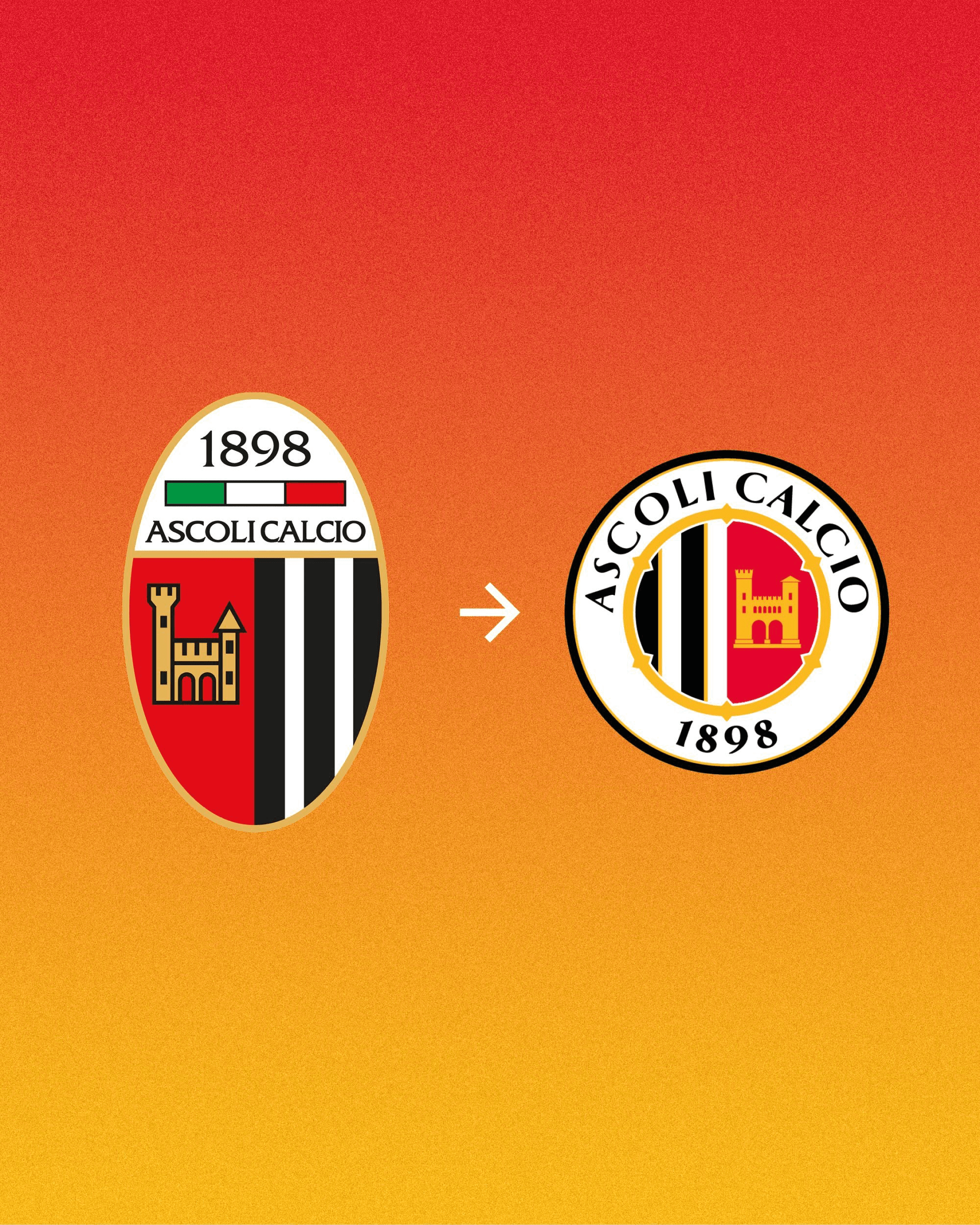
Ascoli Calcio 1898 FC unveiled a rebrand with agency Modì, returning to a circular crest inspired by the badge worn in its last Serie A seasons and folding in local heritage — the Armilla Picena, the Cassero, Ascoli’s hundred towers. The shirts bring back black-and-white stripes with historic yellow piping, and the club recovered the rights to its Picchio mascot for merchandising.
🇳🇴 Nike’s Viking typeface for Norway
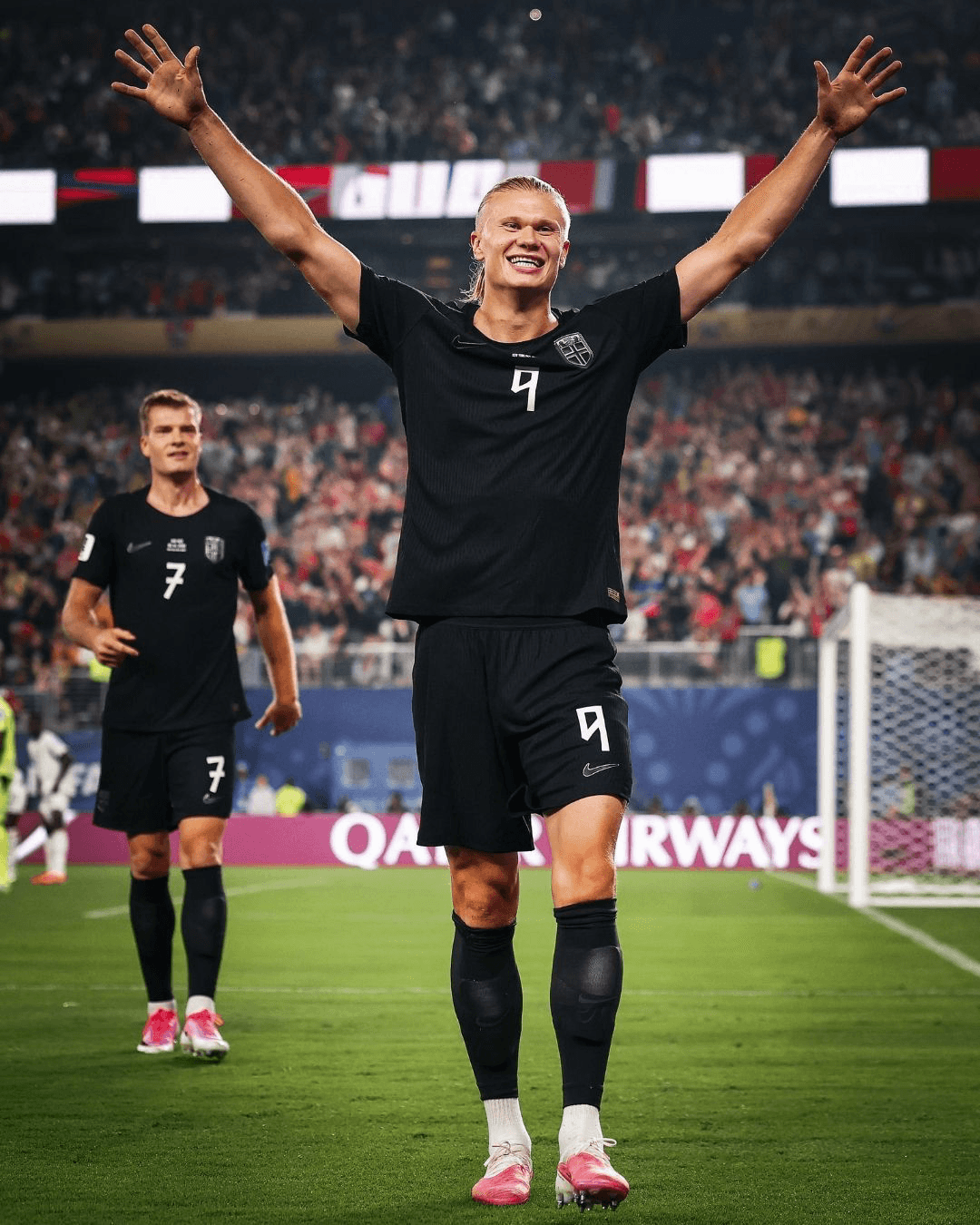
Nike built an exclusive typeface for Norway’s World Cup shirts from the runic Futhark alphabet. Named Harald, it was rejected by FIFA in 2024 over legibility and kit-number rules, then reworked for 2026 — still runic in form, closer to the Latin alphabet in execution. Design as a branding lever, and a reminder that regulation forces the compromise between creativity and commerce.
“Liquid sport”: the era of cultural flexibility
The World Cup consecrated total flexibility, identitarian and sensory. Fans now support their nation while wearing an opponent’s shirt for its style or its story. Blokecore is not a fashion moment: it reveals the shirt as a cultural object, detached from its first function.
The best-performing advertisers are those willing to let go, acting as facilitators between fans and the cultural experiences they actually want. Less forced presence, more chosen relevance.
Napoli’s NFC patch
Summer means new shirts, and one detail is not a detail: an NFC chip embedded in SSC Napoli’s “Authentic” patch, unlocking exclusive club content. The shirt is no longer only a product. It is a login.
Further reading
Ascoli and Norway are the same move at different scales: place and history as brand codes. Liquid fandom and connected kits then describe the consumer on the other side — loyal to aesthetics and access, not only to a club. Brands that insist on exclusive allegiance will lose to those that host the culture around the game.
Key takeaways
- 1 The World Cup is a marketplace of tiers, not a single logo wall. Four tiers plus a legal grey belt around the Clean Zones force brands to choose a job: infrastructure, retail, culture, or city-level activation.
- 2 Sponsorship is shifting from exposure to distribution. Google puts Gemini in fans’ hands; Coca-Cola buys Carrefour endcaps; Salesforce runs host-city workforce. The crest is a door, not the campaign.
- 3 Rights are following the audience onto creator platforms. Watchalongs are being licensed. CazéTV on YouTube is a template, not an exception — personality-led feeds are how new fans enter the sport.
- 4 Value now sits in intangibles. Deloitte’s €40bn record comes with a warning: more matches will not save the model. Naming, heritage, sound, data and fan relationship are the scarce assets — and France still under-monetises them.
After a World Cup summer, the brands that linger will not be those that shouted the loudest in Clean Zones, but those that found a useful role in how fans actually live the game — on the shelf, on the phone, on a streamer’s channel, or in a stadium that feels like a night out.
SB Review returns at the end of September with the first autumn round-up of the sport business stories shaping the industry.